Evening Star
Near the end of his life Cliff understood what had always been missing.
Imagine! The pang of the lack, not of something once possessed then lost, but rather never had, with no ability to seek it, to imbibe what once he would have found cloying, now, now revealed as essential. Awash in hallucinatory passion, he longed to be submerged in another.
“Snap out of it!” His father’s voice, his north star, forever with him, swatting away reverie, demanding excellence. Cliff disentangled himself from his damp bedsheets and sat up, unsure if he could stay up, shivering.
Where is the hearty boy, he wondered, triggering the loop that accompanied his days, the story of his life. The boy who knew what he wanted and set out to bring it all into play. Study, sports, the right college, apprentice to the right star, a star in his own right.
The search for the right wife guided by his mother’s admonition: “It’s just as easy to fall in love with a rich girl as a poor one.” And one day there she was. A shiny girl in tennis whites, solid, accomplished. Over time upon their walls a cavalcade of photos: Shiny tots on the laps of a multitude of Santas. Teens in prom attire. Weddings. Grandchildren cuddling bears and bunnies. An embassy garden party in Paris. Proof that it all happened.
Though in his heart, untold, a wall with no photos, vignettes swept under the rug, the void that lurked under the whirl of accomplishment. A beloved baby boy lost. A shiny little girl who morphed into an angry stranger (the getting around that with bribery, warnings, cajolery, until, shiny again, she sailed off boldly).
The right wife who moved on, out of their circle into her own. Then gone, really gone, seized by the insatiable Crab, cancer. Cliff mourned as if they hadn’t been apart for decades; the mother of his children, with whom he’d shared Thanksgivings, birthdays, gone. While he marched into and through old age, one bony foot in front of the other. Soldiering on. Greeting the day with a mantra of gratitude, de rigueur.
Speaking aloud only of the shiny, hear hear, here here!
He rambles. It’s what he does. A ramble eternal, internal, for it would be disdained by friends and family. His dejection rejected. Snap out of it! Be happy. Cast aside this sudden dream of wild passion, rarely, if ever, his modus operandi. Certainly never during these last few years, as he’d transited from colonial, to condo with a view, to assisted living.
Unbidden passion triggered, no doubt, by his pretty nurse, Gretchen. Diligent, getting the job done. Like the charming, competent girls he’d hired in his day. A pleasure to have around. Great legs, shiny smile. An occasional brief affair. Passion was in the moment. In a bed in a room in a hotel far from the global ad agency he called his second home. It went no further. No furtive calls pledging lifelong allegiance. Hardly any lies. It was what it was.
So how to account for this drowning feeling now? Why is this crotchety, barnacled hull of a man sinking into a pluvial morass at this late date? He observed Gretchen, busy with vials and droppers. She must sense what he’s feeling. Was she laughing, her back turned to him, accustomed to needy old men, well-versed in playing dumb so as not to encourage entreaties, demands?
In any event, he had to pee. He could still manage that, the shuffling from bed to tiny ensuite bathroom. He needed to shower, but settled for a moist cold cloth pressed upon his face, forcing himself to look in the mirror at what he had become. This formerly gorgeous jock, as observed by his mother and grandmother (and his wife when she was in her shiny prime), now a speckled wreck of the Hesperus.
And what was the Hesperus anyway, and why did it come up in so many conversations with himself? He tottered back to bed and considered asking Gretchen to google Hesperus for him. He couldn’t face googling anymore. He’d had enough googling to last a lifetime. Now he just wanted to lie in his bed awash in longing, to imagine what had never been.
Suppose, he wondered, suppose when looking for the perfect wife, he’d come across a girl who whumped him and flumped him, who had no trust fund, no resumé, no compulsively updated rolodex? Would he have succumbed, marched her to the nearest justice of the peace and lived happily ever after? What kind of children would they have had? And what photos would have lined their walls? Certainly none taken at embassy parties. He would have been too busy whumping and flumping to worry about the perks of stardom at a corporation to which he’d have faint desire to kowtow. All desire would have settled on that simple girl. There was a song: You don’t have to be a star to be in my show. She would have been his non-star star.
Star schmar. It never happened. He’d never come upon that fork in the road, had never been torn, had never been prey to that eternal tug-of-war, passion vs sense. Miss Shiny appeared and in the blink of an eye, her ring finger boasted a three-carat solitaire, her apartment filled with shower gifts, on hold until their Bermuda honeymoon was history and his closet overflowed with pleated skirts and little black dresses.
A kind of love, you could say, but not what he ultimately came to understand. What “they” were all about. The ones celebrating their sixty-fifth anniversary, lovers since high school, the “we” gang, the secretive pauses and smiles that made him feel intrusive. Seen, they were seen, one by the other. Devoted. Her back bent from exhaustion, as she tended to his needs at the direst end. He, turning down invitations far beyond the expected period of mourning. There was no one for them but that particular other.
Suddenly his doorway filled with the bulk of Joe, his favorite orderly. “Hey, Cliff. You got your cell phone? Your grandson called to say he can’t reach you. Wants to know if he can come over for a game of chess this afternoon.”
Cliff searched under the blanket and pulled out his phone. “It isn’t charged. Tell him yes.”
“You can tell him. He’s waiting for your call.” Joe plugged the phone into a charger on the night stand, then turned to Gretchen. “How’s my girl?”
An enchanting blush rose from her collar to her forehead as she looked up at him. Speechless, Cliff saw. That would have been his non-star, certainly, speechless at the sight of him. Besotted. He turned away and phoned his grandson, his lovely, loving grandson who never gave up on him, who found the stories of an ornery old fool charming.
“Tim. Timmy.” He stumbled. What he wanted to say, to announce with abandon, was, I love you beyond words. What he said was, “Hey, mate. Me here.”
“Hi Pops. You up for a game of chess? I could drop by around 2 o’clock.”
Cliff smiled at the sound of Tim’s voice, once a halting mezzo, long an embracing baritone. “That’d be swell. Hey, I want you to google something for me. Wreck of the Hesperus. Why do we say that?”
“You remember. It’s a poem by Longfellow, about a ship that went down. ‘Such was the wreck of the Hesperus, in the midnight and the snow…’ Remember? You read it in college, or high school.”
Cliff strained to recall, wanting to please Tim. “It’s on the tip of my tongue . . .” He fell back, spent. “And Hesperus?”
“Search. It’s there, deep in your busy old brain. With the Greeks. Hesperus. The evening star.”
“Like me.” Askew among the pillows, Cliff gazed at the ceiling. “An evening star. Night, actually. Never again to see the morn.”
“Ah, c’mon Pops. Don’t be sad. Have you showered yet? Ask Joe to help you shower. Have lunch. Then prepare to meet your grandson on that most ancient battleground, the chess board.”
Cliff brightened. Yes. Shower. Lunch. One foot in front of the other. That’s the way, had always been the way. “Bring it on,” he cackled, and from the far reaches of his busy old brain spilled the words he’d struggled to retrieve: “For I can weather the roughest gale that ever wind did blow.”
“Bravo! That’s my Pops,” said Tim. “See you soon.”
“Evening Star” appeared in the Spring 2026 issue of Vistas & Byways.
Do I Dare?
Do I dare disturb the universe?
― T. S. Eliot
“My head is boiling,” he said, and that was the beginning.
From there, strange turns of phrase animated every conversation. I hadn’t heard this command of language in the husband I’d loved for sixty years, and as a bashful girl in high school. I’d bop with friends at our Friday night sock hops, and there he’d be, on the sidelines, jocular with the boys and not ever with a girl. “Ask him to dance,” Winnie would whisper, but I never did.
One could point to inevitability, karma, in the way we finally landed together. He’d gone to Drexel, I to Penn, then home again and the first rung of our career ladders. At Winnie’s wedding I was the maid of honor, he the best man. Champagne flowed. We danced and drifted toward a merger.
We wove a tiny universe that expanded with each child’s arrival. I’d smile, feeling fortunate that we all got on so well, among the Schwinn Sting-Rays strewn along the perimeter of our well-tended lawn, bats and paddles, book bags and board games, a popcorn maker all black and shiny, a gift, not something I would buy. And before we could say ‘Jack Robinson,’ they were gone, the boys and their paraphernalia.
Life sometimes seemed as dry as dust, but then a grandchild and we were gay again.
We plied our trades, muddled through early days of retirement, volunteered and dabbled in local politics, waxed ecstatic about our Kindles, learned how to Google and bank online. And stream: on any given evening we were ensconced in matching recliners, rewatching movies we’d loved, or learning the truth about our late heroes in documentaries that featured yapping heads revealing bouts with drink and drugs, glory and redemption.
Until his attention began to wander and the TV remote control became a toy to be poked unto death; my meticulous husband seemed to have been swallowed by a pre-pubescent boy. No. No, no, no, no, no, I told myself. This is not happening to us. I programmed a new remote control and kept it hidden in my sweater pocket and went on watching, plying him with popcorn popped in the old black popper that was not shiny any longer but did the trick.
And then a neighbor called to say he had parked in her carport, and Safeway called to say he was wandering the aisles and couldn’t identify himself. And his sister said, “Spill the beans,” when he couldn’t identify her. “What’s going on with my brother?” I could not bring myself to say.
And here we are. I’m pedaling for two our well-worn tandem. The tires need air. I struggle and breathe heavily. I am Sisyphus.
Last night, as I slept, he figured out how to unlock the ornery contrivance on our door meant to protect him and slipped away. Someone found him crouched in hemlock dripping ice and brought him home to me.
“My head is boiling,” he said, the remaining fragment of his repertoire, though altogether he was cold. I led him to a warm shower and tucked him into our safe bed. But what is safe? Do I hold him here, dreading his next escape? Or do I hand him off to a place where no one will know who he was: jocular yet deeply still, my oldest, dearest friend?
Do I dare disturb our universe? There is no longer time to wonder.
“Do I Dare” appeared in the Fall 2024 issue of Vistas & Byways.
The Late Great Betsy Ann Harris
 FLASH
FLASH
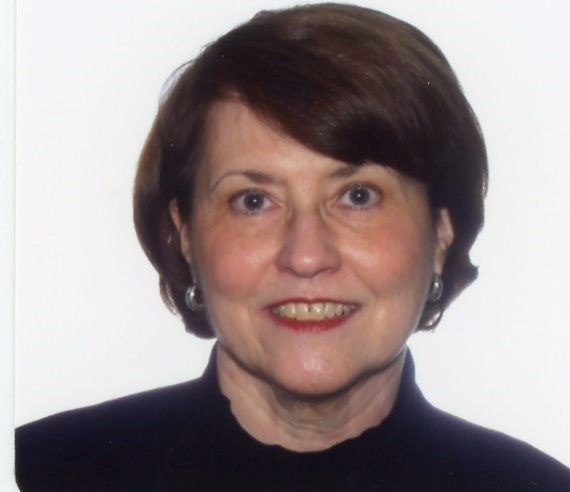
If you can’t be there when someone you love dies, a good substitute for sitting shiva is reading emails you’ve exchanged through the years.
Today I am laughing, crying, commiserating with the late great Betsy Ann Harris, as we face the slings and arrows of approaching old age and its thunderous arrival. Together.
Betsy Ann Harris September 9, 1942 – April 6, 2026
________________________________________________________
You Belong With Us
Judith and despair were becoming one. She felt that as she entered the restaurant and friends stood to greet her. In their eyes she saw sorrow; in the warm grasp of their hands, two holding her one, she felt their desire to reassure her, their need to convey: “We are with you. We are here for you.”
Greg held out a chair for her and she sat, acutely aware that the neat, universally prescribed table for four had been reconfigured. A fifth chair had been added, an anomaly, an odd mole on a face with otherwise perfect features.
Ed leaned over and pointed to the appetizers on the menu that had been thrust into her hands. “We’ve ordered shrimp cocktails, but feel free to get anything you like.”
“We”
“Feel free”
“Get anything you like”
This was the new vocabulary that would define her. She would never be “We” again. She would be expected to “feel free,” to “get anything” she liked, without consultation, negotiation, without concern for another’s allergies, his likes and dislikes. Judith’s eyes misted over, blurring her choices as she perused the menu. She would have to learn what she liked, what she alone could tolerate.
She forced her eyes to focus. She would not order the shrimp cocktail. Lars had developed a nasty rash after they’d shared shrimp at the Washington marina. That was more than fifty years ago and she’d never had shrimp since.
“Can you do a Caesar salad for one,” she asked the waiter.
“I’ll share with you,” Susan and Doris interjected in unison.
The waiter smiled. “Caesar for three, it is.”
“We’ve ordered a couple of bottles of Medoc,” said Ed. “We know you favor red.”
‘No,’ she wanted to say. She’d been drinking red with fish for a lifetime, but it was Lars, her meat eater, who always ordered red for both of them.
Judith smiled at her companions. So caring. They meant well. “You belong with us,” was what they wanted to say. But she didn’t, she knew. She belonged only to herself now.
“If you don’t mind,” she said softly, not wanting to offend, “I’d like a glass of Chablis. I’m having the halibut.”
You Belong With Us appeared in the Spring 2024 issue of Vistas & Byways.
Our Annual Letter
 As I write, and wanting to wish family and friends the happiest of holiday seasons, I can only say, we buried the cat this morning with neighbors standing round and cake.
But that’s no way to start our annual holiday letter, is it? Here’s the good stuff:
We took a grand tour of Spain, all the best places, the Prado in Madrid, Toledo, Barcelona, Gaudi, Picasso. And churches. Glorious cathedrals plastered floor to ceiling with the golden spoils of conquistadors. I guess I was tired, footsore, beaten down by too many tapas and sagging mattresses in our out-of-the-way Airbnb’s, because, gazing at the stained-glass tableaux on the walls of these magnificent behemoths, I began to see the faces of indigenous people from our earlier travels, the blood of disembodied Aztec, Mayan, Incan men, women and children morphing into the gifts of the Magi. But we loved the Guggenheim in Bilbao, the Jeff Koons doggy, the surreal Gehry hodgepodge rising out of a sleepy factory town.
When we returned, Persephone was not herself. Her fur was sparse, she limped. She wasn’t interested in food or us.
Anyway, the boys are great, Jack in his senior year at UCLA. He wants to act, but to please us he majored in Electronics and is looking for a job in Silicon Valley. Billy and Joan are happily ensconced in Florida life, trying to get pregnant with no luck so far and new laws making it impossible to find help in that department. They actually are not “happily ensconced.” They are miserable, but of course one shouldn’t say that in a Christmas letter so forget you read it here.
And they are grieving the loss of Persephone. After all, when she strayed into our kitchen that day in 2015, Jack and Billy were the ones who begged and stomped and insisted that we keep her. And now she is gone. We buried her today in a weedy plot in front of our house. Our neighbors formed a human wall to shield us from HOA purists who would pounce upon such unlawful activity. Marnie brought cake, a vanilla pudding concoction, Vanessa brought compostable forks and plates and we hummed a hymn.
And now it will be Christmas and Jack and Billy and Joan will come home and we will open gifts, enjoy a Whole Foods feast and revel in being together again.
But Persephone will not be among us.
Merry, Happy, dear friends. May the New Year bring you good health, joy, adventure and the best of pets.
P.S.: Good News – Jack just found a job in Silicon Valley; he’s going to manage the box office in a San Jose theater; and off we go . . . .