O Those Cheeks

round plump plums in summer
as I push your stroller round and round
scarlet mounds as you run round and round
grownups sipping aperitifs
taking no notice of you until you fall
gasping for air at their feet giggling
peaches in winter
roundly delectable sweet
and mine to nibble
pale apricots in repose
round blue eyes behind a sweep of lashes
as I read “Horton Hears a Who”
all memory now
as you read “The Underwear Dare” aloud
the snowy angles of your face
remind me of your father, uncle, grandpa
the cherished men in my life who preceded you
you laugh and I hear them
and we go round
and round
and round
O Those Cheeks appeared in Spring 2024 “Vistas & Byways.”
Adventures

Curled up on my bed in winter, my patio in summer, I found pleasure in books: Nancy Drew and Deanna Durbin, witty teens who dashed about in little roadsters, adored by their handsome beaux.
I imagined being beautiful and witty, blond curls rustling in the wind, as Ned or Buck or Jack or Tom reached for my alabaster hand while driving his little roadster.
But Nancy and Deanna did not have freckles. They weren’t chubby. They would never curl up with a book when the sun was shining, when mysteries needed to be solved, when Buck or Ned or Tom or Jack was out front honking the horn of his heavenly roadster, until Mother said to Father, “You must put a stop to that infernal racket, Dear,” and Father marched out to the curb and invited the young man in for a steaming cup of cocoa and homemade chocolate chip cookies.
My mother never baked; I tried it, but failed. My mother never sewed, either, and in seventh grade Home Economics, when I had to make my own apron, to use in cooking class, she cheerfully bought one at a store to replace the misshapen wreck I had created.
But my mother was beautiful, as beautiful as Nancy and Deanna, and athletic, too. She played tennis and biked and her Betty Grable legs attracted the eye of every Tom, Buck, Ned and Jack at a nearby swimming pool, where she dove like a swan and swam like a butterfly.
My mother never had adventures like the girls in my books, but I did, much later, and wish she could have had them, too.
Some of my adventures as an aviation wonk

On the wing of a KC-135.

At an air show in London.

Learning how to fly.

Ballooning in Caen.
Our Gang
 My father’s childhood friends were called Obbie, Bummy, Mooney and the like. Who knows why, since their given names probably were Isaac, Benjamin and Morris.
There are photos of them, sitting on a brownstone stoop, a rag tag army of little toughs, bruised of cheek and chipped of tooth, spoiling for a skirmish, jeering at the photographer who snapped fast because this gang wouldn’t sit straight for long.
My father, Pinny, and his little brother, Natey, tramped through the Great Depression with Obbie, Bummie and Moonie and who knows all, then most of them headed for Omaha Beach and Pearl Harbor, ready for bear.
They came home punch drunk, shell shocked, pulled themselves together and hunted and gathered the prettiest, smartest girls left in the old neighborhood. To make a buck, they sold hot dogs at Phillies games, peddled dolls and mistletoe at Christmas, and dealt cards in the back rooms of luncheonettes before trundling home to fourth-floor walk-ups where their riveting Rosies waited with a chicken in the pot and honey in the hay.
They named their children in memory of their mothers and fathers, grandparents, aunts and uncles—Sarah, Dora, Max and the like—with an American twist, and saw that Susan, Donna, Mike and the like were educated.
In time, they opened shops to house their wares and dealt cards in the knotty-pine basements of their miniscule brick row houses on the barren plains of the city’s outskirts.
When their shops became elaborate emporia, their handsomely coifed wives hauled them to the suburbs that would have them, and Pinny, Natey, Obbie, Bummy and Moony dealt cards in the oak paneled game rooms of their Pennsylvania stone palaces and in summer gathered on the dulcet shores of the Atlantic where long ago they’d slinked among the boardwalk snoots, sliding out of the grasp of a towering Irish cop.
And their grandchildren were called Jonas, John, Vanessa, Sean and Jacqueline, with suffixes of Esq., MD, DDS, MBA and Ph.D., respectively, and sometimes Jr.
Gratitude
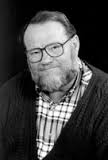
It is Thanksgiving and I am thinking about gratitude and Roland Flint.
Roland taught English and poetry at Georgetown University and presided over a workshop that nurtured generations of finely tuned undergraduates. He also wrote poems and when he read his work, ancient Healy Hall rocked. In a reversal of fortune, this great red bear fed a ravenous audience metered tales of what he knew, what he’d yet to learn, his journey toward gratitude and acceptance.
Roland was never morose, not that we saw, but we knew he had his sorrows (his six-year-old son had been hit by a car, near Healy, killed). He chose to live as a smiling troubadour, a raconteur of the greatest order. With relish, he quoted the great bards of our day, many of whom he knew, and sang of the joys in his life: his living children, Rosalind, friends, his young poets.
His young poets often were morose and wrote about loss and dread in journal entries, which he assigned and carefully read, and in our poems. In our journals he helped us find the questions we should be asking in our trek toward adulthood. As for our poems, he looked enchanted when we read aloud, then encouraged us to go deeper, listen harder, find a better way to “say it.”1
“Keep writing,” was his parting maxim when we moved on, as if each of us had the magic.
Few of us became “professional” poets, instead chose careers as editors, lawyers, diplomats, doctors, journalists. And as misfortune dappled our journey, surely the wisdom of gratitude—for children, grandchildren, a fine book, “a singing in the mysteries connecting us”2—helped light our way.
1 From “Say It,” Say It (Dryad Press, 1979), by Roland Flint.
2 From “What I Have Tried to Say to You, Easy (LSU Press, 1999), by Roland Flint.
Roland Flint taught at Georgetown University for 30 years, published nine books of poems, and served as Poet Laureate of Maryland (1995-2000). He died at the age of 66 in 2001.
Stairs
As a child I thought our blonde staircase grand, that it went on forever. From the floor where I tottered, looking up, it seemed I’d never be able to navigate my way to the top, that I’d never be able to reach the sturdy oak banister, to grip it as I’d take each step, one at a time.
Eventually, I did, of course. I bounded up those steps, two at a time, to reach the seclusion of my room, my solitary space, my sanctuary. “The princess is in her dungeon,” my father would proclaim to anyone asking the whereabouts of his teenage daughter.
Eventually, I walked slowly down those steps, with trepidation, the train of my wedding gown lofted behind me by my two little sisters, out of harm’s way. Away from my room, my solitude, into a world shared with husband, children.
Eventually, I returned to those stairs to help my mother descend from her room, one step at a time, to the floor below, where she tottered, through the living room, the foyer, to the front door. Outside, we guided her down the short flight of concrete steps, over the path lined with American Beauty roses, her favorite, and carefully settled her in my father’s car.
Eventually, we arrived at the rest home, as hospice was called in those days. We walked my mother up a ramp that led to wide glass doors. The small lobby smelled like disinfectant. My mother looked at me and touched my hair, my cheek. For the first time that day, she seemed to know me; for the last time.