My Lost Boy
When I suddenly birthed a child at home, my husband followed instructions from a nurse on the phone, moving me and the baby to our bed and settling us and the umbilical cord on clean towels. I was in shock and no help at all.
“It’s a boy,” he whispered, shocked as well, as we waited for the ambulance.
In the hospital, I asked my obstetrician to bring the baby to me. He did not. He would not veer from a certainty that it made no sense for me to see a six-month fetus weighing only two-and-a-half pounds, whose life would be fraught with problems had he lived.
He would not tell me what they did with my baby, with Kennedy—that’s what I’d planned to call him (or her), in honor of JFK who only months before had been assassinated.
How could this happen? I asked. What did I do wrong? I had just felt him bouncing around inside me. I was only twenty years old, healthy.
“These things just happen,” he answered. There was no ultrasound yet, no device that would have forecast trouble, only platitudes meant to soothe a distraught girl.
As I left the hospital a week later, the doctor handed me a round packet of tiny pills to be taken each day with strict adherence. The age of simple, reliable birth control had arrived. “No more pregnancies for two or three years,” he said. “Your body has to heal and grow strong. You need to take care of yourself and your husband and Andy.”
Andy. My eight-month-old son.
A year earlier we had moved from Philadelphia to the Washington DC area for a business opportunity that excited my husband. I hadn’t wanted to go. I didn’t want to leave my mother, who, at 40, was coping with brain cancer; our parting had been wrenching and most of me was still there, in her heart and household.
Our new apartment was in a modern high-rise in Hyattsville, Maryland, the only sign of life on an abandoned stretch of Route 1, the wretched, meandering road that preceded Interstate 95 as a means to travel from Maine to Florida. The University of Maryland was about three miles north of us. A mile south was the District line. We crossed it every weekend to visit federal monuments, the White House, the Capitol, Smithsonian museums, a harbinger of what would become, over the next forty years, a life brimming with adventure and learning.
As I struggled to adapt to my stark new environment, these expeditions distracted me, provided a respite from loneliness. Often, we went to the zoo, pushing Andy’s stroller among exotic caged creatures and diplomatic families wearing vivid saris and dashikis, turbans and veils. I would remember those days a decade later upon discovering “Woman at the Washington Zoo” by poet Randall Jarrell.
The saris go by me from the embassies.
Cloth from the moon.
Cloth from another planet.
And I would borrow his title for a play about a young woman lost in futility.
You know what I was.
You see what I am: change me, change me!
A week after my “spontaneous abortion,” my husband gave me a cobalt blue Chevy Nova convertible for my twenty-first birthday, hoping that would cheer me. But I could not stop thinking about my lost boy. There had been no ritual to mark his death, no urn of ashes, no teddy bear in a grave that we could visit. In my mind, he wandered alone in infinity.
Driving aimlessly in my little Nova one day, I began to cry. I cried that night and the next day and every day. My alarmed husband called my doctor, who referred us to a psychologist. “You should both go,” he told us, “because you both lost a child.”
After the first visit, my husband declared himself okay and never returned, but I was drawn to the comfort of Mrs. Osterman’s lovely office and her concern for me. I so hungered for the warmth of my large extended family back in Philadelphia.
We talked about my lost little boy, my valiant mother, my childhood. She counselled me on motherhood and wifedom and steered us toward a community of young families where I would find friends and Andy would have playmates.
With that move, I began to feel capable again.
My equilibrium returned.
The crying time ended.
Andy thrived.
On the death of Desmond Tutu – 12/26/21
 I had the pleasure of meeting Bishop Tutu on the morning after his Nobel Peace Prize was announced, in 1984.
He was going to the Washington Post for an interview and I was going to my office next door.
As I am star-struck and given to chatting with strangers, I stopped to congratulate him as we strode past each other.
He clapped his hands and giggled, practically jumped up and down with joy, absolutely adorable. “How do you know already?” he asked.
“It’s on all the news,” I said, laughing with this hero who helped end apartheid in South Africa. A perfect moment in my cache of memories.
When Nelson Mandela was released from prison a few years later, he too was interviewed by the Post and I was one of many who gathered nearby to watch as he entered the building, surrounded by bodyguards.
Working next door to the Washington Post was very exciting.
You Go Girl ca. 1963
I don’t want to hear stupid
Girl you were never stupid, only foolish
Saw the stories in your books
but not the stories all around you
But now it’s done and what I say is
A woman’s place is with her husband
Your husband says go, you go
Don’t say you’ll miss me
Don’t say you’ll miss your mama
You had us all nineteen years of your little life
Now you have a husband
That’s all you have
That’s all you’ll ever have
‘Cept children
You’ll have those too
for a while
I had eight
Children
All gone now, the girls like your mama following their husbands
because I said so
Don’t matter if they slap you around
Make you feel panic like dirt flying off a swept floor
I got thirteen grandchildren
And I’m telling you grandchild
Your place is with your husband
He says go, you go
Ironing Handkerchiefs
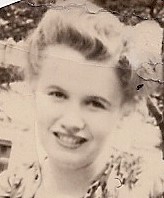
Remembering my mother
It is 1977 and I fold a load of laundry at the kitchen table. The noonday sun suffuses the large airy room and my mood with warm comfort and I reminisce:
It is 1972 and I am folding laundry in my bedroom. The radio is on and a frantic voice says “George Wallace has been shot.” My baser self thinks, “Good,” but my kind side, the one I inherited from my mother, thinks about his wife and children. Does he have parents? I am a mother and daughter, primed to sidestep politics and feel the human side of a story.
I take my husband’s shirts to the ironing board, out of the sun’s reach, and think of the Tillie Olsen story that begins with a woman ironing and musing. I am that woman, musing about my mother sweating over the ironing board in our dark, cramped apartment, teaching me to iron handkerchiefs.
I have a PhD in ironing handkerchiefs.
Ocean Air
 In the time of corona, I long for the sea.
From Philly, where I grew up, it was only about two hours to Atlantic City. As we approached the coast, the air grew cooler and the humidity of the city faded from memory. A stench of sulfur told us we were passing Egg Harbor. Then salt air breezed in, wiping away all unpleasantness and we knew we were almost there.
I practically hung out the window waiting for the Atlantic City skyline to come into view. This was decades before gambling and glitz took over, and I could pick out each grand old hotel, Steel Pier and Million Dollar Pier, and the spot where Mr. Peanut would bow genteelly to passersby and wave them in to a shop that roared with the frolicking sound of the roaster and teemed with the delectable salt water taffy coveted by visitors each summer.
Once we arrived at our rented flat it would take only a few minutes to toss our stuff into our rooms and head out to the beach. The best moment was climbing the stairs to the boardwalk and then clambering down another set of stairs onto the broad expanse of scorching sand. With burning feet we’d find the perfect spot for our blankets and umbrella and, amid shouted warnings from our exhausted parents, rush into the endless, gray Atlantic. If we were lucky, the jelly fish and stinging flies had not appeared yet and we could float and swim and ride the waves in bliss.
In the lonely time of corona, my mood lifts when I recall those days.
And just as the mood of my parents lifted then, as the sea air enfolded us, my mood lifts with anticipation of a day when I will walk along the water’s edge, my thirsty feet splayed among an array of shells peeking out of the cold mud. I will meet friends for dinner and we will drink a toast to all we have endured and enjoyed, to life.